Africa on the Global Stage: Key Insights from the Continent’s First G20 Summit
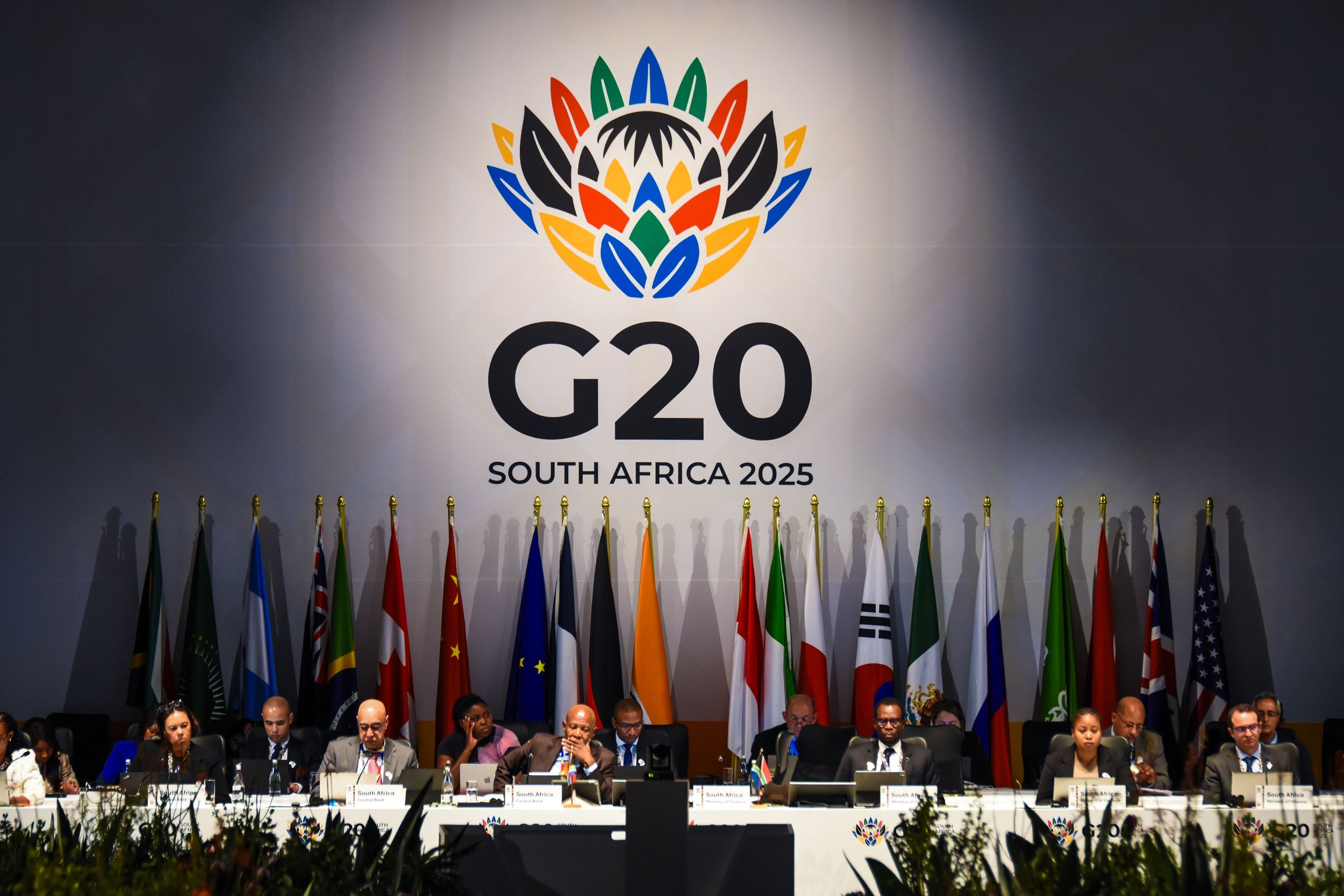
Last month, South Africa became the first African nation to host the G20 Summit – a landmark moment that brought renewed global focus on the continent’s priorities. Despite the absence of the United States from the gathering, member states reached a consensus and published a 122-point declaration. Crucially, the declaration focused on many of the most pressing issues facing the African continent and reaffirmed the importance of multilateralism at a time when international cooperation is increasingly under pressure.
We were encouraged by the focus on themes that have been central to our programming throughout 2025. As we look ahead to 2026 and beyond, we have outlined five key takeaways from the summit below:
1. Debt Sustainability for Low-Income Countries
The declaration recognised the growing debt burden faced by many developing economies, which restricts governments’ ability to invest in essential public services such as healthcare, education, infrastructure and climate resilience. The G20 has committed to supporting low- and middle-income countries in addressing debt vulnerabilities and reviewing how multilateral institutions structure frameworks for debt relief and restructuring.
Invest Africa’s debt-for-development discussions continue to bring stakeholders together to explore how restructuring can unlock resources for critical public investment. Click here to read our recently published executive summary on debt-for-development swaps and currency risk mitigation.
2. Critical Minerals for Inclusive Growth
The G20 Critical Minerals Framework offers a voluntary model for improved cooperation between mineral-rich countries and developed economies. Recognising the strategic importance of critical minerals for climate transition, economic development and national industrial strategies, the framework calls for partnerships between governments, the private sector, financial institutions, development organisations and local communities.
Invest Africa’s 13th Annual Mining Series next year will continue the dialogue on strengthening supply and value chains, ensuring the mining sector supports broader sustainable development goals. To find out more about how you can participate in the Mining Series, click here.
3. Advancing Global Food Security
The South African Presidency introduced the G20 Food Security Task Force to strengthen global coordination and accelerate solutions to hunger – currently affecting an estimated 720 million people worldwide. With substantial untapped agricultural potential, Africa needs to play a central role in addressing global food insecurity. However, financing for climate adaptation and infrastructure is critical to empower smallholder farmers and scale agricultural productivity across the continent. If effectively supported, Africa’s agricultural transformation could become a cornerstone of global food stability in the decade ahead.
Click here to view our panel session on ‘Seeds of Opportunity – Agribusiness as a Strategic Asset’ at The Africa Debate – UAE.
4. AI, Data Governance & Innovation
The G20 and African Union launched the AI for Africa Initiative to promote cooperation in artificial intelligence and data governance. As AI increasingly influences economic growth and everyday life, the initiative aims to build shared training, capacity and responsible adoption to support innovation-led development across Africa. This coordinated effort gives African economies an opening to build robust ecosystems that support innovation-leg growth and inclusive digital transformation.
Click here to watch our panel session on ‘Digitising Africa’s Resource Economy – Can Technology Unlock Full Value from Natural Capital?’ from The Africa Debate.
5. Strengthened Partnership for Africa
The significance of the first G20 hosted on African soil was reflected in the declaration’s emphasis on economic growth, trade, job creation and the crucial role of the private sector. The Summit emphasised that deepening partnerships between G20 nations and African economies will be essential to driving investment and enabling two-way commercial opportunities.
Invest Africa remains committed to working with G20 partners and our private-sector network to increase trade and investment flows across the continent.
Conclusion
Africa’s first G20 Summit has set a collaborative agenda focused on sustainable growth, innovation and shared prosperity. As these commitments translate into action, we look forward to continuing the conversation and supporting the partnerships to help build the frameworks, relationships and investment pathways that drive meaningful impact across the continent.