
Why African trade finance is often judged before it is understood
By Kevin Ramsamy FCCA, Chief Executive Officer, Alteia Group
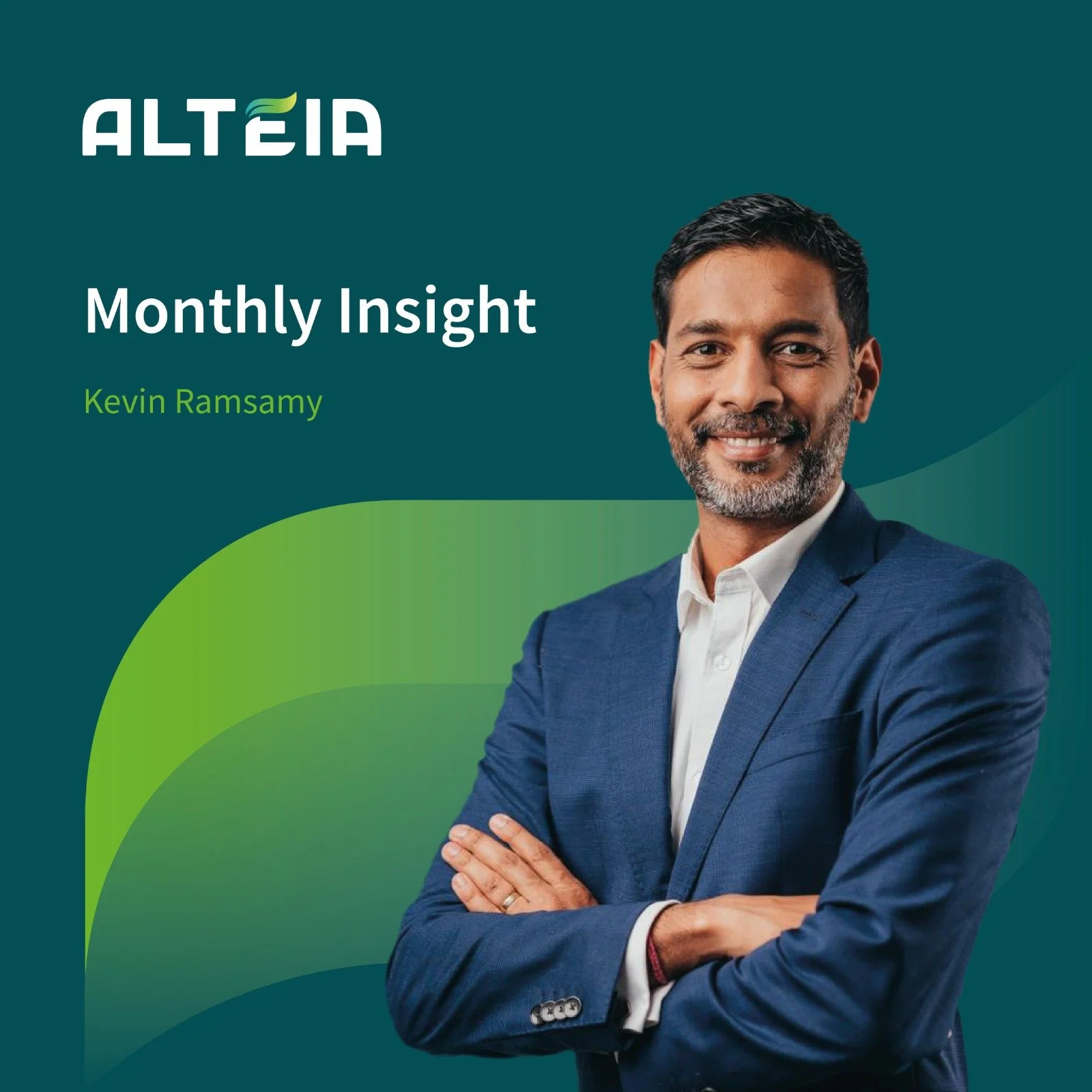
A leadership perspective on how African trade finance is often evaluated and why those assumptions deserve re-examination.
A perception gap sits at the very start of how African trade finance is evaluated. In many cases, the conversation ends before it begins. In my experience, much of this judgment forms before the underlying structure of the transaction is ever examined.
When investors hear "African trade finance," three assumptions tend to dominate:
Higher risk
Political instability
Hard currency and liquidity constraints
These factors exist in different forms across the continent, but the most misleading assumption is that they apply uniformly and automatically make African trade finance riskier as an asset class.
In practice, Africa is not one market, one system, or one risk profile. Yet it is often evaluated as if it were. Media narratives tend to focus on disruption and crisis, while successful trade corridors, functioning logistics chains, and repeatable export flows receive far less attention.
The mental shortcut is immediate: Africa equals risk. Analysis comes second, if at all. I have found that what is often described as “high risk” is, more accurately, risk that has not been sufficiently understood.
Where risk actually sits
One of the most common misunderstandings in African trade finance relates to where risk truly resides.
In export-focused trade finance, the risk does not necessarily sit on the continent itself. When commodities are financed for export, repayment risk is often linked to the buyer and the destination market in Europe, Asia, or North America, rather than to the country of origin.
Consider a typical example: a shipment of processed minerals from Southern Africa to an established European manufacturer. Financing is provided when the commodity is physically present and verifiable, the goods are shipped under marine insurance, and payment is triggered on delivery.
At that point, the credit exposure sits with the offtaker, the contract, and the transaction structure, not simply with geography. This distinction is frequently overlooked when African trade finance is assessed as a single, location-based risk.
A global asset class, not a regional exception
Trade finance is a challenging asset class everywhere. Difficult transactions span continents. Geography alone does not determine outcomes. What matters is how risk is structured, managed, and governed through counterparties, contracts, and operational experience.
The underlying mechanics of trade finance remain consistent across regions. Goods move from one market to another. Payment depends on contractual performance, logistics, and counterparties. The asset class itself does not change, only the operating environment.
International insurance data shows Africa does not exhibit disproportionately high levels of non-payment or default claims relative to global trade finance volumes. Where insurance is most often required in African trade transactions is not commercial default, but political risk, reflecting regulatory, policy, or transfer considerations rather than counterparty failure.
Trade finance is never one-size-fits-all. Each transaction must be assessed based on the commodity, the origin, the destination market, the buyer, and the structure used to mitigate risk. Applying uniform assumptions to fundamentally different trades leads to distorted conclusions.
Structure, experience, and risk control
Export trade finance should be clearly distinguished from intra-country trade finance. Domestic transactions carry different risks and dynamics. Alteia's focus is on export trade, where international buyers, established supply chains, and cross-border documentation create a fundamentally different risk framework.
Even within export trade, transactions rarely move in a straight line. Operational variables are constant: transport delays, customs processes, weather conditions, and port congestion. These factors introduce performance risk during the in-country leg of a transaction, particularly in origin markets, and must be actively managed.
However, performance risk should not be conflated with credit or payment risk. While in-country execution requires careful due diligence, local expertise, and operational controls, the ultimate payment risk in export trade finance is typically linked to offshore counterparties, hard-currency contracts, and established buyer markets.
The role of an experienced trade finance manager is to distinguish between operational friction and genuine default risk, and to structure transactions accordingly. Sound risk management lies not in eliminating uncertainty, but in understanding it, monitoring it, and building structures that can absorb it.
When structure has limits
No structure removes all risk. This is why disciplined trade finance relies on layered protections: primary repayment mechanisms, alternative exit routes, and, where appropriate, insurance.
Macro developments can still affect otherwise sound transactions. Elections, regulatory changes, and trade policy shifts in destination markets can delay or disrupt flows. Temporary import restrictions, for example, can stall a transaction even when the underlying trade remains viable.
Successful African trade finance requires as much attention to developments outside Africa as within it. Destination markets, buyer regulation, and global trade policy are integral parts of risk assessment.
The role of expertise
Some losses attributed to "African risk" stem from insufficient experience or inadequate processes.
Investors or financiers entering trade finance without the necessary local knowledge, operational controls, or risk frameworks encounter difficulties and then generalise those outcomes. Trade finance rewards experience, systems, and restraint. Robust processes and teams who understand how trade actually functions on the ground materially change risk outcomes.
Looking ahead
Over the coming decade, African export corridors remain strategically positioned. Resource scarcity, climate pressures in other producing regions, and shifts in global supply chains are increasing the relevance of African commodities.
At the same time, many producing countries are moving beyond raw exports toward processed and higher-value goods. This evolution increases both the complexity and the relevance of trade finance.
Opportunity exists, but it is not generic. It rewards informed, structured approaches rather than broad exposure or narrative-driven assumptions.
Moving from judgment to understanding
African trade finance is not risk-free. Neither is trade finance anywhere else. The challenge lies in how quickly and how crudely judgments are often made.
Experience changes perspective. We have brought investors to production sites to observe extraction operations and see the full supply chain from origin to export. They often reassess their assumptions. For many, metals or minerals are abstractions: commodities seen only in finished form. Witnessing the ground reality, the operational discipline, and the logistics infrastructure that supports African exports provides a different lens through which to evaluate risk.
The question is not whether Africa carries risk. It does. The question, in my experience, is whether investors judge by geography or by structure: by perception or by practice.
About Alteia
Alteia is a specialist investment manager focused on short-term, self-liquidating trade finance across Africa and the GCC. The group deploys secured and Shariah-compliant credit solutions through fund entities managed by Alteia Fund Management Limited, a Mauritius-licensed and regulated investment management company, and through Alteia Capital, a Saudi CMA-licensed investment firm, under a disciplined governance framework.
CEO Edition Monthly Insight
This article forms part of Alteia’s CEO Edition Monthly Insight series, which explores structured trade finance, capital discipline and evolving market dynamics across Africa and the GCC.
Future editions are shared via Alteia’s LinkedIn page:
https://www.linkedin.com/build-relation/newsletter-follow?entityUrn=7421536118799740928
Disclaimer
This material is a marketing communication and is provided for general information purposes only, which information may change without notice. This material is not intended to be accurate, complete, up to date or relied upon for investment decisions. It does not constitute an offer, solicitation or recommendation to subscribe to or buy any investment product or service. Any investment decision should be made with independent professional advice and should be based on official fund documentation, subject to the terms outlined in constitutional documentation, applicable policies and offering memoranda.
Those who access this material do so at their own initiative and are responsible for compliance with the laws and regulations of any relevant jurisdiction. Any forward-looking statements, performance claims or testimonials are illustrative in nature and do not guarantee future results. The Alteia group companies shall not be liable for any loss arising from the use of or reliance on this material. The full legal disclaimer is incorporated herein and can be accessed at: https://alteiafund.com/disclaimer/.