
The AfDB's push for African financial sovereignty, and a tech investment rebound
A New Financial Architecture for Africa
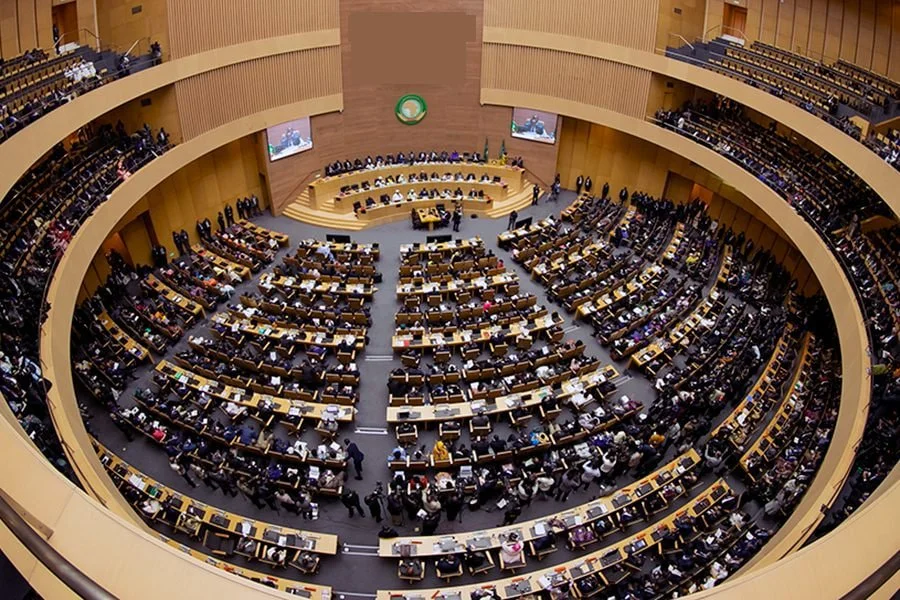
In his first official address to the Assembly of Heads of State and Government of the African Union (AU), during its February 14-15 annual summit in Addis Ababa, African Development Bank (AfDB) president, Dr. Sidi Ould Tah, set out the bank's vision for what it calls a new African financial sovereignty.
The cornerstone of this is the New African Financial Architecture (NAFA), a framework designed to coordinate the continent's fragmented financial systems and mobilise domestic capital at scale.
The initiative has four core pillars, or "Cardinal Points"
1. Unleash the power of African capital, so that savings and institutional funds finance the continent's development.
2. Rebuild Africa's financial sovereignty, with NAFA as the central instrument to mobilise and deploy resources at scale and strengthen Africa's position in global financial governance.
3. Transform the continent's demographic asset into an economic dividend, supporting youth and women's entrepreneurship and developing regional value chains.
4. Build resilient infrastructure with high added value, to accelerate industrialisation and promote continental economic integration.
Presenting NAFA, Dr. Ould Tah stressed that it "is not a slogan". It is a deliberate reorganisation of the way Africa mobilises, allocates, and deploys its capital for development. A shift from fragmentation to coordination. From isolated transactions to systemic scale. From dependence on external capital to financial sovereignty," insisted Dr. Ould Tah.
The last part of his comment is particularly noteworthy.
Many African governments are grappling with severe fiscal pressure, driven by high borrowing costs, exposure to global uncertainty, and limited access to patient capital.
Debt is perhaps the most striking illustration of the challenge many economies are facing. According to available data African governments now spend an average of 17% of their revenues on debt servicing. Thirty-two African nations spend more on external debt than on healthcare; twenty-five spend more on debt payments than on education.
Africa's external debt has surged from $220bn in 2009 to a record $685bn by the end of 2023 – equivalent to 24.5% of the continent's combined GDP. Interest payments have increased by 132% over the past decade. As a result, 20 low-income African countries are either in debt distress or at high risk of falling into it, while the G20 Common Framework has so far relieved just 7% of the total value of external debt owed by at-risk lower-income countries.
The $90bn "Debt Wall"
The need for initiatives like NAFA was starkly illustrated by S&P Global Ratings, which warned in early February that African governments face over $90bn in external debt repayments in 2026—more than triple the 2012 level. Egypt accounts for nearly one-third with $27bn due, followed by Angola, South Africa, and Nigeria.
"Structurally high debt and low, concentrated revenue bases will continue to pose key risks," S&P said, noting that government debt averages 61% of GDP across the continent, with interest payments absorbing nearly 15% of public revenue.
The AfDB's push for financial sovereignty is both welcome and necessary. It also echoes the growing realisation across the continent that - as global geopolitics and economic transition towards a multipolar order - Africa has an opportunity to redefine its role in, and exercise greater leverage over key areas such as financing.
It's a message that will surely also not have been lost on those in attendance at the AU, an organisation that is itself notoriously dependent on external capital. Of its annual budget of around $650m annually, member states contribute just 22-25%, with the remaining 70-75% essentially being aid, led by the European Union (EU), European Donors like Germany and the United Kingdom, as well as the United States and China.
This is a decade after the 2016 Kigali Decision - which aimed to make the AU financially independent by 2021.
It's a sober reminder that the test for NAFA, as always, will be in execution. The AfDB is due to provide an update to the AU on its operationalisation, which will hopefully validate Dr. Ould Tah's assertion that this "is not a slogan".
Tech Investment: A Cautious, but Noteworthy Recovery
African tech funding reached $4.1bn in 2025, a 25% increase marking the strongest performance since 2022, according to new data from Partech.
But composition matters more than headline growth.
Equity funding rose just 8% to $2.4bn across 462 deals. The real surge came from debt financing, which jumped 63% to $1.64bn and now represents 41% of total capital deployed, up from 17% in 2019.
Companies raising debt typically have revenue-generating operations and use the capital to extend runway without dilution. The shift reflects a market that learned painful lessons from the 2021-2022 boom, when capital chased growth metrics over business fundamentals. The funding winter of 2022-2024 enforced discipline—founders focused on unit economics, investors became more selective about burn rates.
What's emerged is a pattern of larger rounds, fewer deals, and revenue-focused business models. This may prove more durable than the speculative exuberance of previous years.
Investors now back proven models in established markets. Kenya, South Africa, Egypt and Nigeria—the so-called Big Four—captured 72% of total funding. Kenya led with $1.04bn (+72% year-on-year), benefiting from regulatory clarity and relative macroeconomic stability. South Africa regained its position in equity deal flow leadership.
Fintech remained the largest sector by capital deployed, capturing $1.49bn across 150 deals. But its share of equity funding declined from 60% in 2024 to 32% in 2025—less a sign of distress than normalisation as other sectors matured. Cleantech nearly doubled to $1.18bn (+99% year-on-year), while enterprise software ($274m), e-commerce ($312m), and healthtech ($224m) each crossed $200m in annual equity funding for the first time since the boom years.
Two countervailing trends stand out.
Domestic investors—African corporates and development finance institutions (DFIs)—contributed 45% of total commitments, up from an average of 23% between 2022-2024. African Development Bank-backed funds, regional DFIs, and corporate venture arms from banks and telecom operators drove much of this growth. Greater domestic capital reduces dependence on global cycles and strengthens long-term ecosystem resilience, though international capital will remain essential for scale.
However, the seed pipeline continues contracting. Deal count fell 1% to 311 rounds in 2025, down 38% from the 2022 peak of 504 deals. Capital deployed at seed stage dropped 4% to $462m. Since seed companies are tomorrow's Series A prospects, a shrinking early-stage pipeline today means tighter deal flow in 2027-2028.
Historical conversion rates underscore the challenge. Of startups that raised seed funding in 2021, only 5.1% successfully raised Series A within two years. For the 2022 cohort, the figure was 4.2%. Even in better market conditions, the path from seed to growth stage remains narrow.
The funding environment rewards execution in predictable regulatory environments. Capital follows demonstrated business models, defensible margins, and clear paths to profitability. Where governance credibility exists—at the country, sector, and company level—investment follows. Where it doesn't, capital remains scarce regardless of opportunity size.
The Africa Debate 2026
These developments—the push for a new financial architecture, mounting debt pressures, and a maturing but cautious tech ecosystem—reflect core questions about Africa's economic trajectory as the global order shifts. They are precisely what we will be discussing at The Africa Debate 2026, which convenes in London on June 03 under the theme "Redefining Partnership: Navigating a World in Transition."
At its heart is a question of economic sovereignty: how do we strengthen Africa's control over financing and markets—from capital mobilization and investment structures to industrial and financial policy—so African economies can take greater ownership of their growth. Without this control, political progress alone cannot unlock prosperity.
As global partners seek greater engagement with the continent amid unprecedented economic and geopolitical change, they must recognise African agency, respect African priorities, and deliver genuine partnership. The years ahead will be defined by how effectively the continent turns disruption into leverage, and partnership into shared value.