
From Interest to Investment: Where Africa’s Next Opportunities Are Emerging
Across Africa, the investment conversation is changing. For years, much of the focus has been on whether international investors are interested in African markets at all. Increasingly, that is no longer the right question. The more important question is whether markets can convert that interest into conviction, and ultimately into capital.
Our latest investor sentiment research pieces in the Democratic Republic of the Congo and Mauritius offer two very different answers to that challenge.
The DRC is a market where investors see enormous potential, particularly in mining, energy and infrastructure, but remain cautious about the conditions required to realise it. Mauritius, by contrast, benefits from a strong institutional reputation and an established position as an African gateway, but faces a different challenge: convincing investors that the opportunity extends beyond the sectors and narratives they already know.
In both markets, the message from investors is remarkably consistent. The opportunity is there. What matters now is clarity, confidence and credible pathways to investment.
Below are a few of our key takeaways based off our research.

1. The DRC has passed the apprehension threshold. Now it needs to convert interest into action.
The DRC remains one of Africa’s most compelling frontier markets. Its immense natural resource base and strategic importance to global critical-mineral supply chains mean that investors simply cannot ignore it, and our research suggests that interest is only growing.
55% of investors express positive sentiment towards the DRC’s 2026 economic outlook, rising to 58% over a three-to-five-year horizon. Yet beneath that headline is a more interesting story: 31% of respondents are neutral about the near-term outlook.
That group should not be interpreted as disengaged - 83% of investors within the neutral segment remain open to further engagement. This is what we have termed the persuadable middle.
These investors have not ruled out the DRC. They are keeping a close eye on macroeconomic conditions, governance reforms and security developments, and looking for greater evidence before committing. Therefore, the opportunity is not to convince investors that the DRC is attractive, but to give those already considering the market enough confidence to take the next step.
That means moving from broad promotion to practical engagement: investor missions, engagement with local partners, transparent data and discussions with businesses already operating successfully in the market.
The research shows that experience matters. Active investors report materially higher confidence than prospective investors, suggesting that proximity and operational visibility can reduce perceived risk. In other words, for the DRC, getting investors closer to the opportunity may be just as important as telling them about it.
2. Critical minerals are opening the door. Energy and infrastructure could keep it open.
There is little ambiguity about where investor conviction is strongest in the DRC. Mining and natural resources stand in a league of their own with 89% positive sentiment, followed by energy and infrastructure at 72%.
This reflects more than the strength of the mining sector itself. The DRC sits at the centre of global conversations around critical minerals and the energy transition, creating a structural demand story that is likely to persist well beyond current market cycles. But the greater opportunity may lie in what comes next.
Our report points towards the potential for investment strategies to build on the country's mining reputation by attracting complementary investment in downstream processing, energy supply and infrastructure. The mining opportunity creates demand around it: power, logistics, financial services, industrial inputs and supporting infrastructure.
This is where the DRC's investment proposition can evolve from a resource story into a broader industrial one.
Energy is particularly important. Investor interviews highlighted the scale of unmet power demand, while energy and infrastructure ranks second among the sectors surveyed. Yet investors remain cautious about how quickly structural constraints can be addressed.
The opportunity is therefore significant, but it is not passive. The capital will follow projects that can demonstrate credible execution, reliable partners and a clear route through the operating environment.
3. Mauritius has a different challenge: investors already believe the story.
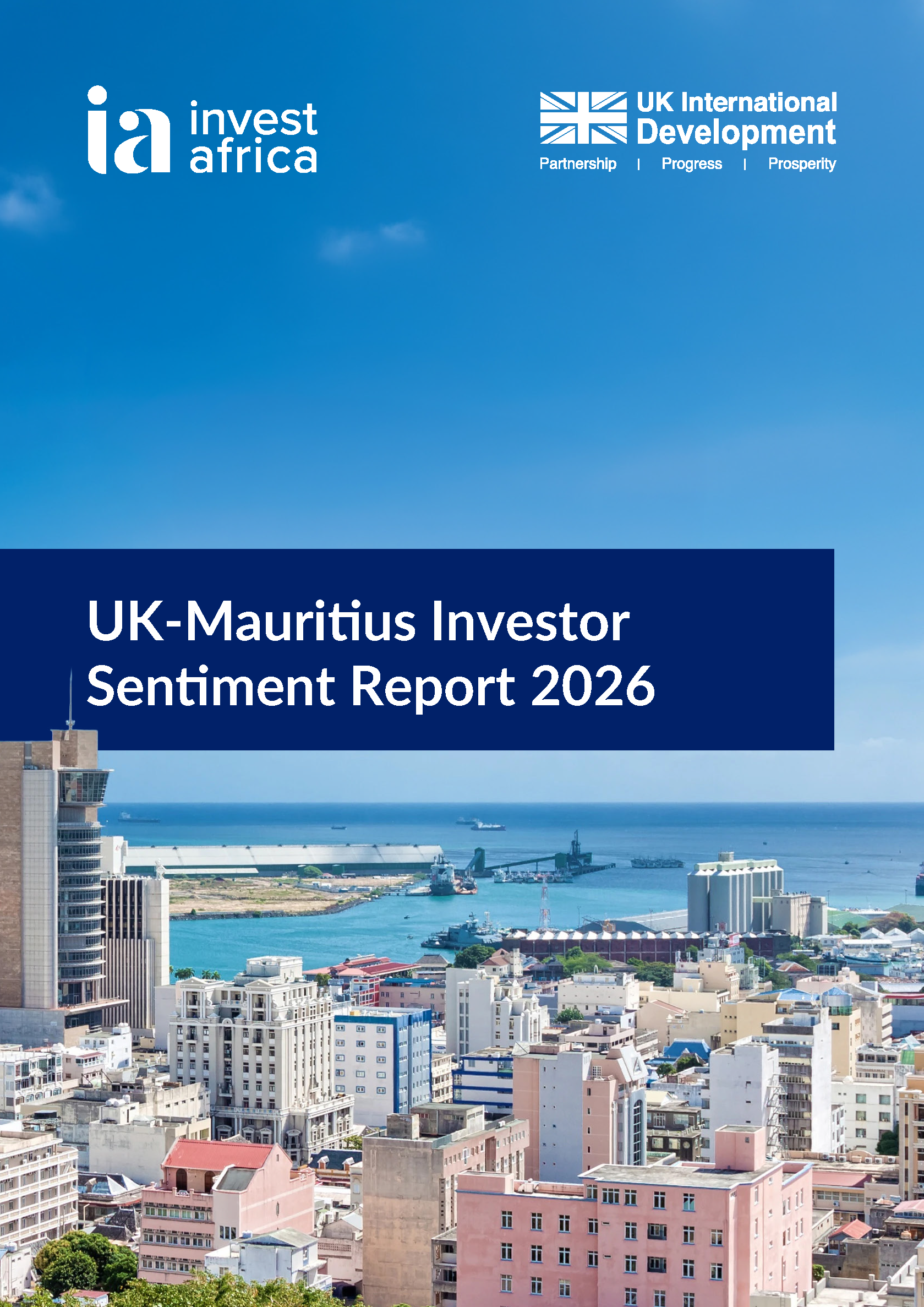
If the DRC is trying to turn cautious interest into conviction, Mauritius starts from a very different position. 60% of UK investors surveyed have a positive view of Mauritius' 2026 economic outlook, rising to 67% over three to five years. Negative sentiment is just 3%.
81% of investors surveyed view Mauritius as an attractive gateway to Africa, and the fundamentals underpinning that view are already well understood: political and economic stability, an established financial services sector, robust legal and financial infrastructure, and a strategic position linking Africa and the Indian Ocean. The task, then, is not to invent a new proposition for Mauritius, but to make fuller use of the one it already has.
Our research points to an information gap rather than a perception gap. Investors with greater familiarity show stronger conviction, yet awareness of specific investment opportunities remains comparatively limited. Mauritius doesn't need a louder investment story; it needs a more precise one.
The strength of the gateway proposition presents an opportunity to move beyond the idea of Mauritius simply being a geographical entry point to Africa. Instead, postioning as an operating platform for navigating African markets, providing the infrastructure, expertise and connectivity that international companies need to manage complexity across the continent.
4. Where are investors looking next?
Mauritius' established strengths remain clear. Tourism records90% positive investor sentiment, while financial and professional services reach 81% and real estate and property also attract meaningful levels of investor confidence.
The interesting story sits further down the rankings.
Investors show emerging interest in infrastructure, green and circular economy opportunities, education, renewable energy and healthcare and life sciences. These sectors may not yet carry the same familiarity as tourism or financial services, but they represent an opportunity to diversify the country's economic model. This matters because investors are questioning the concentration of the Mauritian economy in cyclical sectors.
The challenge is therefore to build a broader investment narrative around the country: one that connects Mauritius' existing strengths in services and finance with emerging opportunities in technology, climate resilience, the blue economy and productive investment.
The research effectively asks Mauritius: can you show investors the wider investment story?
5. Across both markets, information is becoming an investment tool.
Perhaps the strongest common thread between the two reports is that investment promotion is no longer simply about visibility.
In the DRC, 77% of investors identify strengthened governance and transparency as a top-three driver of future investment, while 94% rate geopolitical conditions as important or above. Banking stability is also critical, with 90% placing it among their key investment considerations. In Mauritius, ease of doing business and governance and transparency similarly sit at the top of the investment decision hierarchy.
The lesson is clear: investors need more than an attractive proposition. They need confidence that they understand the proposition, the rules around it and the pathway from interest to execution.
That is why investor sentiment research matters.
At Invest Africa, we increasingly see data, market intelligence and investor engagement as part of the same process. Through our IA Consult offering, we work with governments, financial institutions and private-sector partners to understand how markets are perceived by investors, where perception differs from reality, and what interventions can help convert interest into investment.
6. The Bottom Line: Africa's opportunity is becoming more specific
The investment case for Africa is often presented in broad terms: demographics, natural resources, urbanisation and growth. But investors do not invest in a continent. They invest in markets, sectors, companies and projects. The DRC and Mauritius demonstrate why Africa's investment story needs to be more targeted.
For the DRC, the opportunity lies in converting resource-led interest into broader investment across energy, infrastructure, and downstream industries, while addressing the governance, security and information barriers that continue to shape investor confidence.
For Mauritius, the opportunity is to build on an already strong reputation and build its position as a sophisticated operating platform for investment, trade and business across Africa.
7. The real opportunity lies in closing the gap between what investors know, what they believe and what they are prepared to do.
That is increasingly where investment promotion, investor intelligence and trusted partnerships can make the difference. Africa does not lack investment opportunities. The challenge is making those opportunities visible, credible and actionable to the capital looking for them.
To explore the full findings of both report, click here.